Requesting a Call:
Online Support
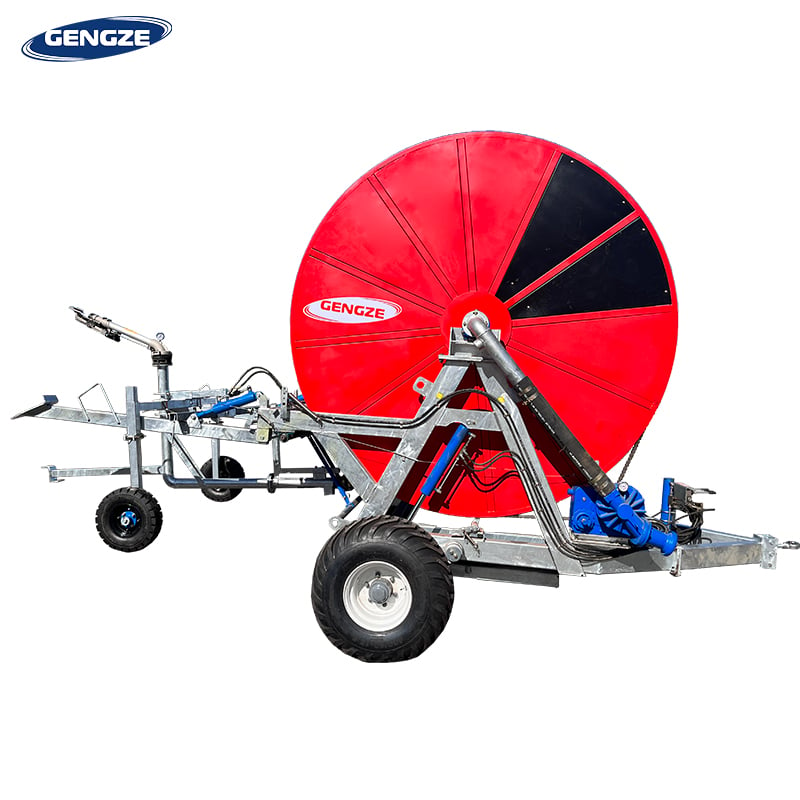
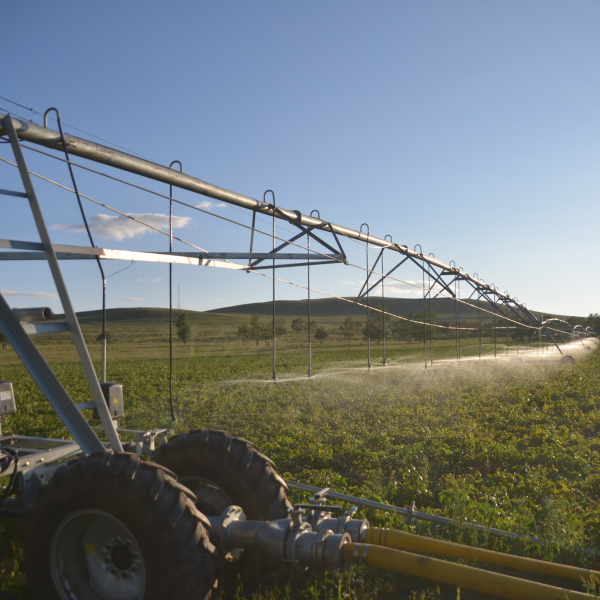
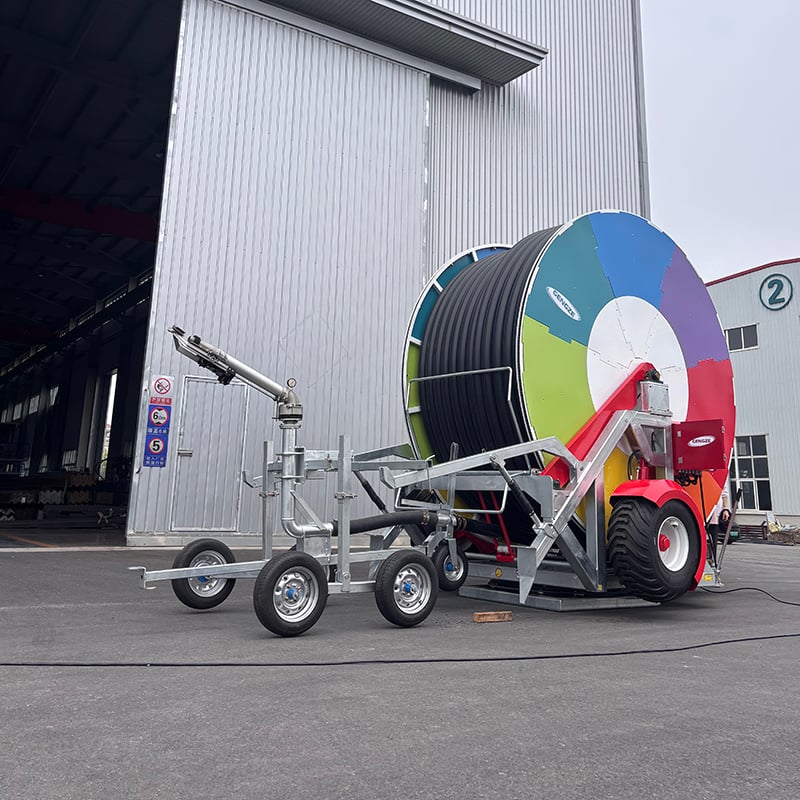
Hose reel irrigators have established themselves as a versatile, cost-effective mobile irrigation solution for modern commercial farms. Unlike high-capital fixed irrigation systems such as centre pivots, hose reel machines deliver flexible, uniform watering without large-scale underground pipe installation. Manufactured by Dalian GENGZE Equipment, these irrigators come in water-turbine, electric-motor, diesel-driven and truss-mount configurations, allowing precise matching to diverse field conditions, power sources and crop types. While not universal for every growing operation, they excel in well-defined agricultural use-cases as outlined below.
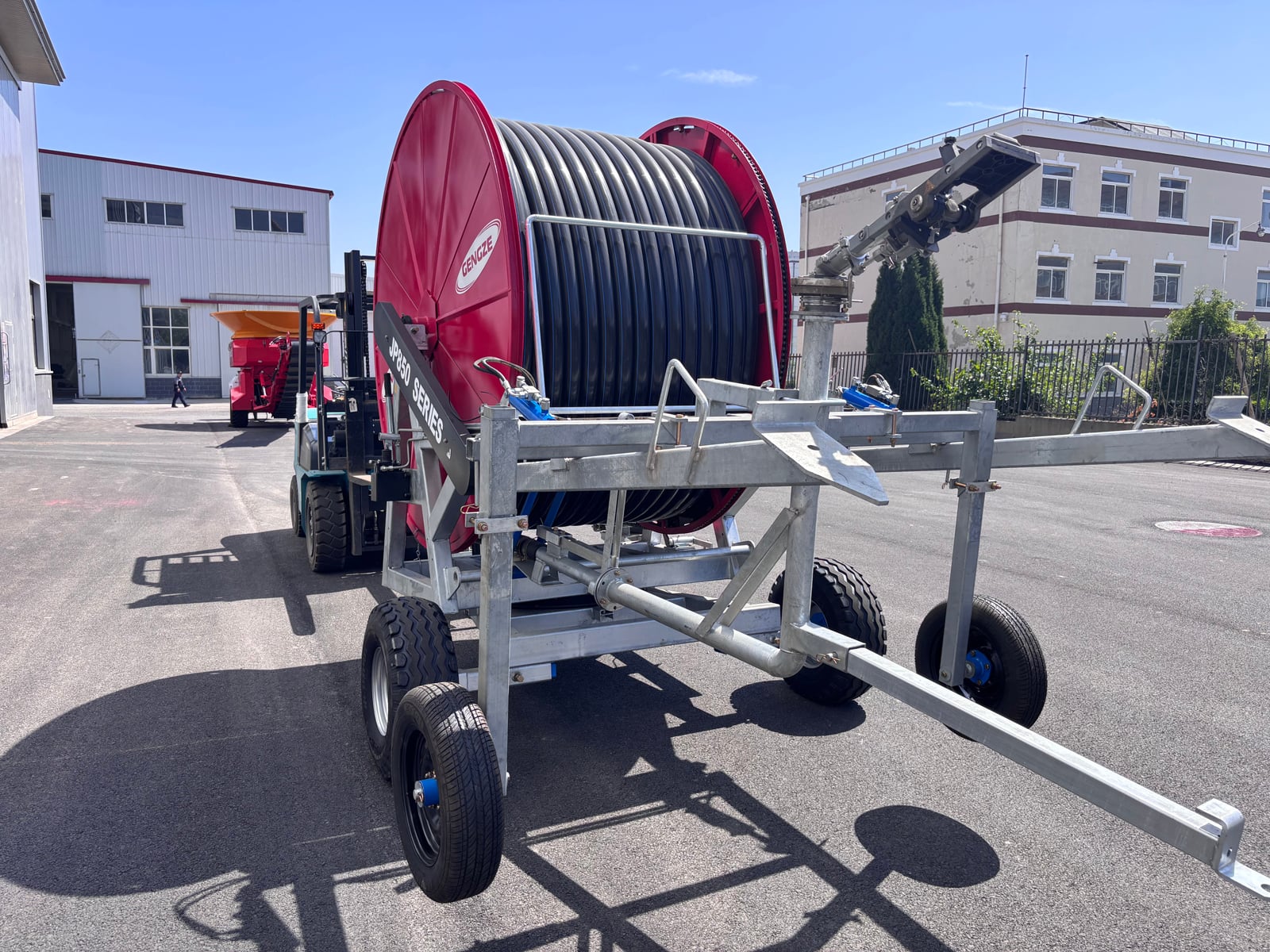
Broad-Acre Row & Field Crops
Hose reel irrigators are a reliable workhorse for large open-field grain and tuber crops, including corn, wheat, soybeans, cotton and potatoes.
GENGZE water-turbine hose reel models use water power to automatically retract the sprinkler unit at adjustable travel speeds, creating even water distribution across the whole field and minimising surface runoff. They provide critical supplementary irrigation during heatwaves or dry spells, stabilising germination and reducing crop heat stress. For fragmented plots where installing a centre-pivot system would be economically unviable, these towable units offer an affordable alternative for emergency drought watering.
Open-Field Vegetables & High-Value Cash Crops
Commercial vegetable farms and high-value cash crop plantations gain major benefits from hose reel irrigation systems. Cabbages, carrots, onions, sugar beets, sugarcane, tea and bananas can all be irrigated effectively with properly configured machines.
The truss-type hose reel variant is particularly well-suited here. Equipped with multi-nozzle spray trusses (up to 50 m span), it delivers low-pressure, fine atomised spray that is far less vulnerable to wind interference compared to standalone rain guns. Operators can swap nozzles to suit tender seedlings or mature produce. The equipment supports fertigation, including liquid chemical fertiliser, biogas slurry and farmyard manure application. One machine can be relocated across multiple crop blocks to align with crop-rotation schedules.
Pasture, Forage & Hay Production
Livestock operations growing alfalfa, clover, ryegrass and hay for silage are ideal candidates for hose reel irrigators. Grazing land frequently consists of scattered, irregular-shaped paddocks with shifting watering requirements under rotational grazing.
A single towable hose reel unit can service multiple separate fields. It extends the grazing season in hot summer weather and boosts forage yield and nutritional quality, all without expensive permanent buried pipe networks. The diesel-powered hose reel series works perfectly for remote pasture locations where grid electricity is unavailable.
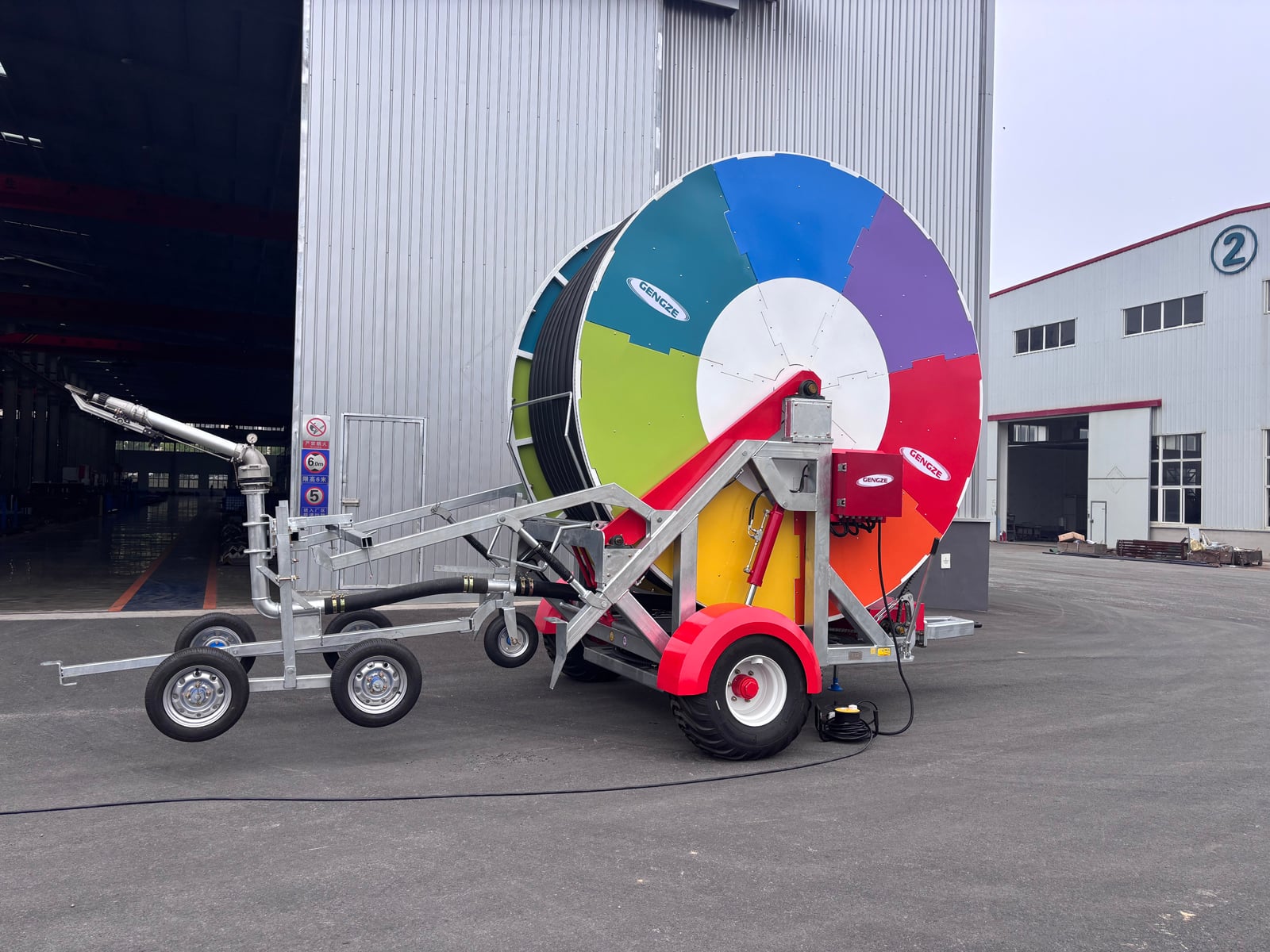
Orchards & Young Fruit Plantations
Though drip irrigation remains widespread in mature fruit orchards, hose reel irrigators perform excellently for wide-row orchards, newly-planted saplings and vineyards.
Wheeled chassis enable easy travel along orchard alleyways. Low-drift sprinkler heads can be selected to limit unnecessary wetting of fruit foliage. Farmers rely on these machines for young-tree establishment, frost-protection watering and emergency heat relief to complement existing drip infrastructure.
Irregular, Sloped & Rented / Leased Farmland
This is one of the strongest advantages of hose reel technology. Fixed irrigation hardware struggles with odd-shaped, split, hilly or fence-divided fields. GENGZE hose reel irrigators adapt to varied field geometry and moderate slopes with no permanent ground installation required.
Many farmers operate on leased land. Since these machines are fully towable, they can be transported between different rented parcels, avoiding wasted capital on pipes for temporary farmland. Our engineering team can generate custom irrigation plans within 24-hours upon receiving your field dimensions, soil type, crop variety, water-source and terrain data.
Off-Grid Farmland: Diesel-Driven Hose Reel Solutions
For farms with sufficient water resources but no access to mains electricity, diesel-engine hose reel irrigators deliver fully independent irrigation performance. Widely used for grain, cotton, pasture and orchard irrigation, they feature stable power output and good fuel efficiency, making them the go-to choice for remote rural locations. In contrast, electric-motor-driven models with intelligent touch-screen controls are best deployed where reliable grid power is accessible for vegetable bases and large family farms.
Special-Use Case: Hose Reel for Slurry & Organic Waste Application
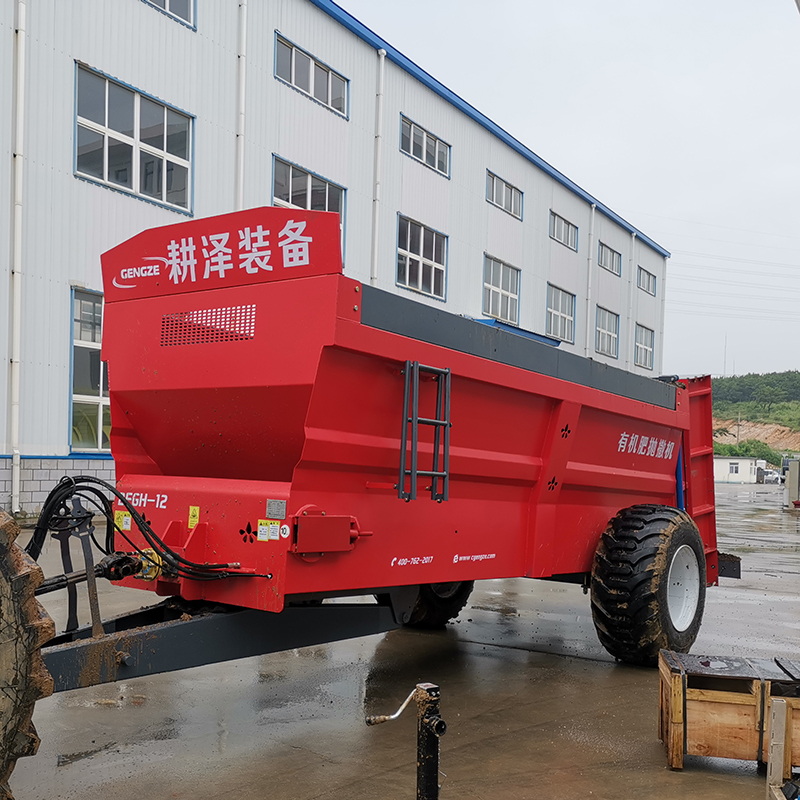
Beyond pure irrigation, heavy-duty large-bore hose reel irrigators handle biogas slurry and liquid manure spreading at throughput rates up to 200 m³/h. This supports circular sustainable agriculture: livestock waste is evenly distributed as organic fertiliser across farmland, combining irrigation and manure recycling in one pass.
Limitations — When Hose Reel Irrigators Are Not Recommended
Hose reel irrigators are not the optimal solution for high-density protected-tunnel crops, ultra-delicate leafy greens requiring very fine mist irrigation, or extremely steep, rocky ground that prevents safe machine movement. For such scenarios, drip tape or fixed overhead sprinkler lines are more appropriate.
Final Summary
Hose reel irrigators deliver maximum return on investment for broad-acre row crops, open-field vegetables, cash crops, forage pastures, young orchards, fragmented plots and off-grid farmland. GENGZE supplies four core drive types (water-turbine, electric motor, diesel engine, slurry-applicator version), with optional spray-gun or truss configurations and comprehensive after-sales service including operator training and spare-parts support.
If you are searching for CE-certified hose reel irrigators tailored for your farm’s soil, crops and power conditions, contact GENGZE’s technical team for custom specifications and quotations. Submit your field information, and we can prepare your preliminary irrigation proposal quickly.
 Hot News
2026-11-10
2026-11-03
2026-10-19
2026-10-13
2026-10-08
2026-09-29

Dalian Gengze Agricultural Equipment Manufacturing Co.,Ltd
Copyright © Dalian Gengze Agricultural Equipment Manufacturing Co.,Ltd All Rights Reserved | Blog | Privacy Policy
 EN