
 EN
EN
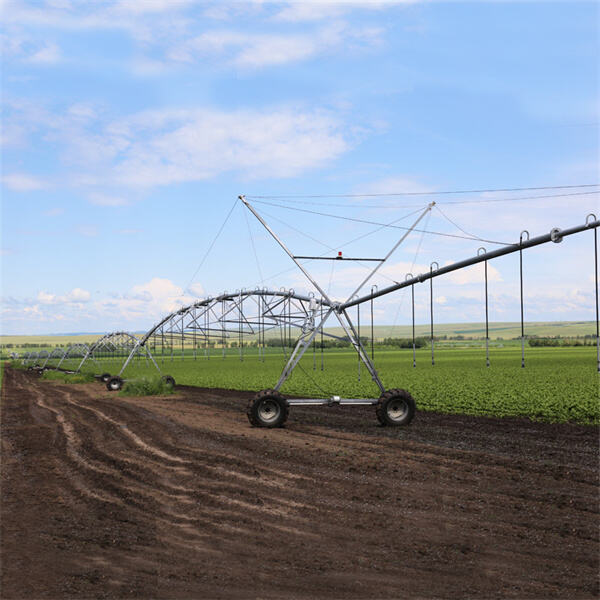
Circular irrigation systems are a big help in providing farms with water when and how they want it. These systems are designed to water crops in a circle, so by necessity they cover a lot of ground with less effort. That is significant because water is a scarce resource, especially in agriculture. Now that more farms are adopting circular irrigation, we can see how this practice conserves water and also grows more food. Gengze is dedicated to providing these powerful equipment for farmers, that make your work smarter and easier. By examining how these circular systems operate, we see the numerous ways they help farms to flourish.
How Circle Livestock Irrigation Systems Increase Water Efficiency on Large-Acreage Operations
Circular irrigation systems are engineered to use water in an intelligent manner. They have rotating arms that slosh water in a circular motion. That is, the entire field is watered uniformly. More conventional methods can result in wasting water, since they don’t cover all areas evenly. And with circular systems, farms can also determine how much water they require and avoid over watering. Farmers have an economic incentive to use less water, and they can contribute to environmental conservation by preventing their water sources from becoming safe havens for the virus. For instance, a farmer in a circular system might discover they only need to use 70% of the water previously used. This is a huge saving! And less water waste also leads to healthier rivers and lakes. Round systems also allow farmers to monitor water use. Many of them are equipped with technology that allows farmers to monitor in real time how much water they are using. It also helps farmers make faster decisions so they don’t waste water. At Gengze, we think that by helping farmers to be more efficient they can grow more, with less stress.
Getting the Most Out of Your Crops with Circular Irrigation Systems
In its simplest terms, maximizing crop yields would be to produce the most food possible from the land and its resources. Farmers can accomplish this in a couple of ways, the most common being with help from circular irrigation systems. For one, these systems water plants precisely where they want it: at the root level. When your plants can absorb the right amount of water, they grow healthier and send out more fruits and vegetables. For example, crops like corn and wheat prefer uniform watering. Farmers using circular systems often proclaim of better, precocious and convergence yields than those with older methods. One plus of these systems is that they can be manually tuned depending on the weather. In a heat wave, farmers can ramp up the water. Cooler days they can turn it down. This flexibility helps to ensure crops receive exactly what they need in order to grow healthy. Farmers can also see which parts of their fields need more water and which do not. This knowledge assists them in better planning and utilizing their resources. Here at Gengze, we know that given the right tools, farmers can accomplish remarkable things. By using circular irrigation, they not only grow more but do so in a manner that benefits the planet.
Circular irrigation technology offers numerous advantages to large-scale agriculture. They enable farmers to use less water more effectively, and to grow more crops. Here at Gengze, we are proud to bring to farmers these innovative tools which improve the sustainability and intelligence of farming.
How Circular Pivots Can Address Common Water Management Challenges
Circular irrigation is an intelligent means to dosing large fields of crops with water. They enable farmers to use water as effectively as possible, which is a good thing, because water is scarce. An issue of great concern in farming is unequal distribution of water. As farmers water their crops, they do not want individual plants to receive too little water. If certain plants receive more water than others, while some don’t get enough, it can be damaging to the crops. Circular irrigation system assist with this, by enabling water to be applied evenly over a circular area. That way there are no dry areas on the field, and all plants receive the correct amount of water.
These systems also save water. In the traditional irrigation standards, much water can simply be wasted either through evaporation or run-off. Circular irrigation means the water is fed directly to the plants’ roots, minimizing waste. This is very important in water-deficient regions. Farmers relying on circular irrigation can maintain healthy crops while safeguarding the mineral content of the soil. Circular irrigation can also be used on more than one type of soil. Some soils are very absorbing and some aren’t. Rotating systems can be customized for different types of soil so that each and every crop receives the correct amount of hydration.
Farmers using circular irrigation also save time and labor. Farmers can configure these systems to automatically scale tasks for them, rather than relying on old methods or spending countless hours watering their fields by hand. That lets farmers concentrate on other tasks that need attention, like planting and harvesting. Gengze is into circular irrigation system, providing farmers with reliable systems to enhance the water coverage. These systems can help farmers bump up their crop yields and get more from their land. In general, centre pivot systems can be a valuable option to consider for addressing routine water manage problems in large-scale agriculture.
Selecting the Appropriate Center Pivot Irrigation System for Large Fields
Before selecting a center pivot system for a major field, there are several factors to bear in mind. Farmers must first consider their fields’ sizes. They have a variety of systems for various sizes of land. A bigger field may require a more powerful system that can reach more area. It is also important to think about what kind of crop you’re growing. Some plants require more water than others, therefore, the irrigation system should be able to provide for those differing needs.
The water they get should then be considered by the farmers. Whence art the waters flowing? This is a good thing to know because it can be easily used to select a system that will easily retrieve water using the source. It is also important to construct the water. In case there is a lot of dirt or other substances in the water, farmers may need a system that will have filters to avoid contamination of vegetables. Through this, Gengze can provide systems that operate under all water qualities and could provide the crops to the clean source of water.
Another important consideration is the weather. One that minimizes evaporation particularly applies in dry hot areas. On the other hand, in regions of heavy rainfall, a system that is capable of disposing excess water would be more appropriate. Budget is also an issue that farmers should take into account. And some may prove to be a more expensive investment, but they too can be potentially cheaper in the long-run through the less of water and less of labor consumed. Gengze offers a variety of choices at various price points and farmers could select the option which fits them most of all.
Lastly, you need to consider the easiness of the system to maintain. In order to sustain the system, it should be taken care of. The farmers need to choose a system that they can repair by themselves or have great customer service. It is a reliable producer of circular irrigation system and you cannot miss on them.
What Problems Are Prone To Occur In Circular Irrigation Systems And How To Solve?
Although it is true that circular irrigation systems possess numerous benefits they also have a few disadvantages. Cost is one of the prevalent issues. The installation of a circular irrigation system is expensive. But the price may be taken as an investment. In the long run, these systems would save farmers money by consuming less water and having higher crop yields. The farmers have to do their research and seek financial assistance or grants that are used to finance the start-up costs. Gengze in particular usually provides tips on funding sources, which enables the farmers to invest less.
The second limitation issue is that of maintenance. Failure of a system component can disrupt the system to the extent of stopping water supply hence destroying the crops. The farmers should be on a maintenance schedule to ensure that they check whether anything is amiss on a regular basis. There is also a need to train personnel on the maintenance of the system. Gengze provides training and resources to enable farmers to know how to maintain their irrigation systems.
Circular pivot irrigation can also be a nightmare of the weather. An example of areas where the system can be compromised entails high wind areas. The system might need to be adjusted to the best of its working in different weather conditions. Farmers could be educated to change their systems to respond to locally-specific weather patterns. Direction is part of gengze, it assists farmers change systems to suit other climates, and select the most optimal ones to apply to their fields.
Lastly, water distribution imbalance in the system may be a problem. Unless the installation is completed correctly, certain zones will end up receiving excessive amounts of water and others with insufficient amounts of water. This would be rectified by having the system checked every now and then and rectified where necessary. Another consideration made by farmers during installation of the system is the field layout, which ensures even distribution in all areas of the fields. The farmers, under the advice of Gengze, would be able to overcome these issues and achieve great returns on their round irrigation systems.
Table of Contents
- How Circle Livestock Irrigation Systems Increase Water Efficiency on Large-Acreage Operations
- Getting the Most Out of Your Crops with Circular Irrigation Systems
- How Circular Pivots Can Address Common Water Management Challenges
- Selecting the Appropriate Center Pivot Irrigation System for Large Fields
- What Problems Are Prone To Occur In Circular Irrigation Systems And How To Solve?