Requesting a Call:
Online Support
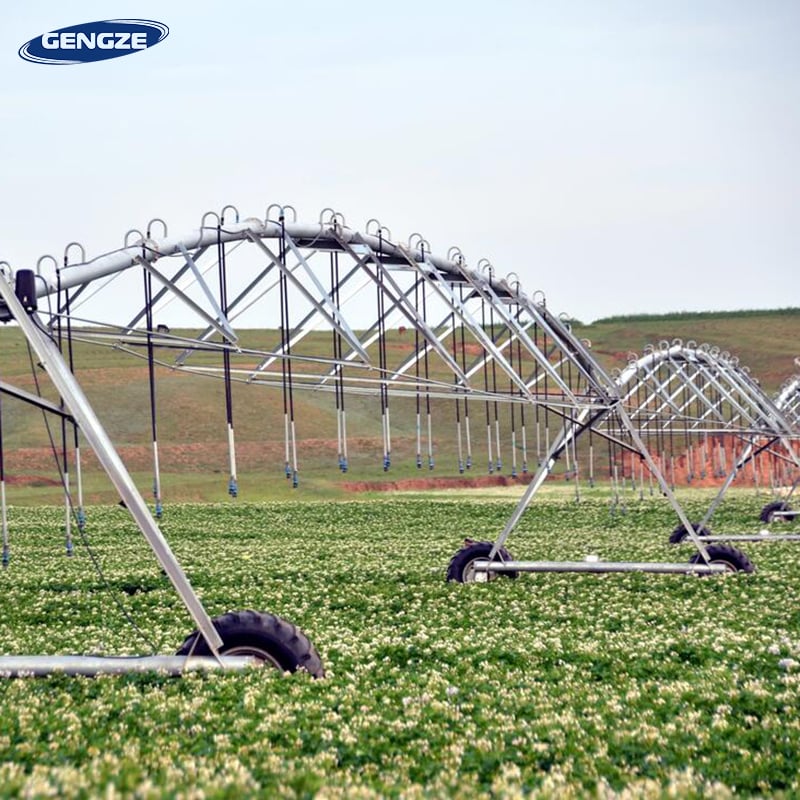
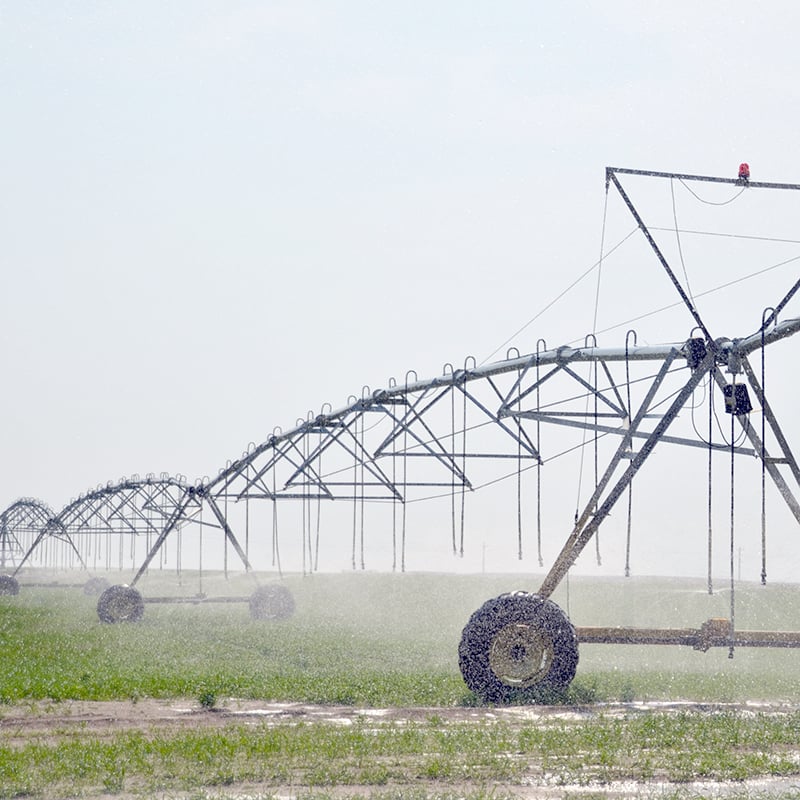
Commercial crop farming faces rising pressure to optimize water usage, cut labour costs and stabilise yields across variable weather. For large-scale operations, center pivot irrigation has become one of the most reliable irrigation choices. However, many farm owners hesitate because they lack a clear full-lifecycle cost breakdown. This article walks through capital investment, annual operating expenses, ROI drivers and key factors affecting pricing, helping you evaluate whether a center pivot system is a financially sound investment for your farm.
1. Upfront Capital Cost Breakdown
The total initial investment is not only the pivot machine itself. A complete field-ready package covers structure, water supply, power, controls and site work. Prices vary widely by field size, terrain, water source and automation level.
●Center pivot main equipment (trusses, towers, drive units, sprinkler package)
●Pump & water supply system
●Power supply & control system
●Site preparation & installation labour
●Optional extras
2. Annual Operating & Maintenance Costs
After installation, ongoing expenses determine your long-term total cost of ownership (TCO).
●Energy cost: Electricity or diesel for pumping and tower movement. This is usually the biggest recurring expense, driven by water volume and pumping lift.
●Routine maintenance & spare parts: Gearboxes, tyres, seals, nozzles and electrical inspections. Budget roughly $500–$1,500 per year for a standard pivot.
●Labour: Automated systems greatly cut manual irrigation labour compared to hose or hand watering. Many commercial farms operate pivots with only occasional supervision.
●Insurance, depreciation and finance interest: These fixed ownership costs should be included in your farm budget calculation.
3. ROI & Financial Benefits for Commercial Farms
When comparing center pivot vs flood irrigation or portable sprinklers, focus on revenue gains and cost savings:
1.Higher and more consistent crop yields: Uniform water distribution reduces drought stress and crop loss.
2.Water savings: Modern low-pressure sprinklers cut water waste significantly vs traditional flood irrigation.
3.Lower labour demand: Once set up, the system runs automatically, freeing your team for other farm tasks.
4.Fertigation compatibility: You can apply liquid fertiliser through the irrigation line, optimising nutrient uptake.
Payback period depends on crop value, water cost and yield lift. High-value row crops often reach payback within 6–10 years. Bigger fields with multiple pivots shorten the return cycle.
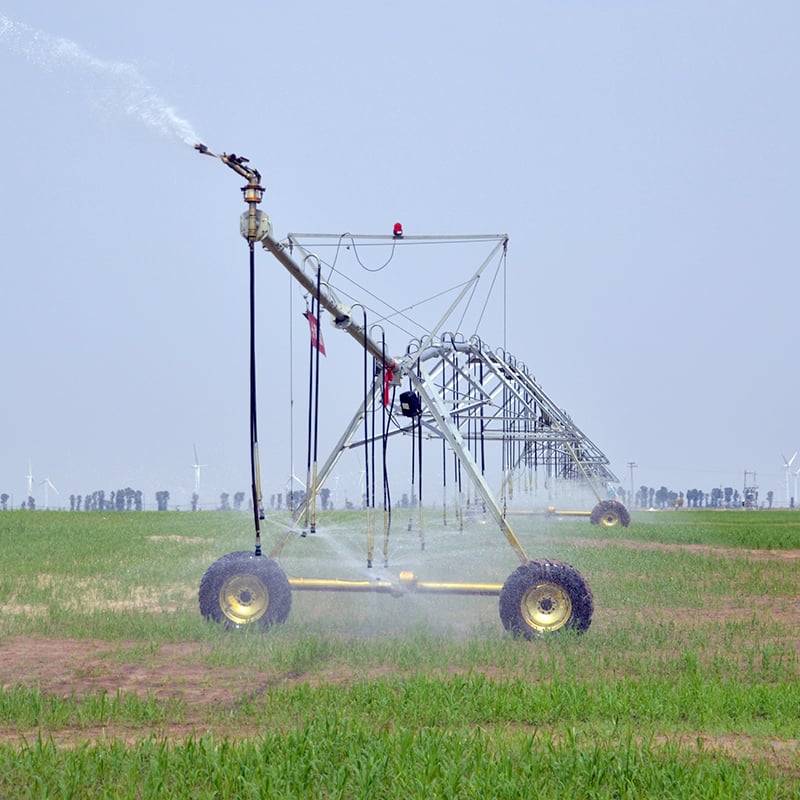
4. Key Factors That Change Your Final Price
●Field shape & terrain: Flat circular fields are most economical. Sloped or irregular fields may need corner systems.
●Water availability and pressure: Deep wells or low water pressure require larger pumps, raising costs.
●Material grade: Hot-dip galvanised steel extends service life in corrosive environments.
●Automation level: Basic manual control costs less; remote cloud monitoring saves labour and enables precise scheduling.
●Shipping & import duties: For overseas buyers, freight, customs and local installation services must be included in the full project budget.
5. Is Center Pivot Worth It For Your Farm?
Center pivot irrigation is best suited for commercial farms with large, relatively open fields growing corn, wheat, soybeans, potatoes and other row crops. If your land is fragmented or your crop has very small planting areas, a reel irrigation system may be more cost-effective.
Before purchase, complete a site assessment: check water flow rate, power access, soil type and crop plan. A custom quotation based on your actual field data will give you the most accurate budget and ROI forecast.
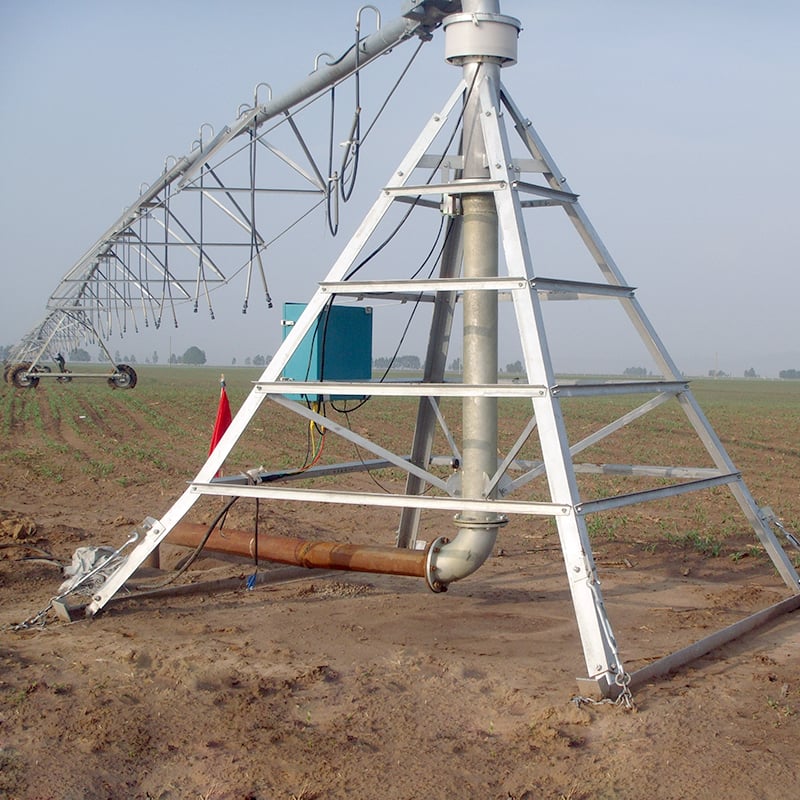
A center pivot irrigation system is a major capital investment, yet it delivers predictable water management, labour reduction and yield stability for commercial agriculture. The true cost is more than the machine price; you need to account for pump, piping, power, installation and multi-year maintenance. By comparing total cost of ownership and projected yield gains, farm managers can decide if this irrigation technology matches their long-term farm strategy.
If you need a custom solution, contact our team for field layout design, technical specifications and competitive quotation for your center pivot irrigation project.
FAQ
Q: How many acres can one center pivot cover?
A: A quarter-mile pivot typically irrigates around 120–130 acres. Half-mile models cover around 500 acres depending on field layout.
Q: How long does a center pivot irrigation system last?
A: With regular maintenance, galvanised steel center pivots can operate for 20+ years.
Q: Can I add fertigation and remote control later?
A: Yes. Most modern center pivot designs support retrofitting remote monitoring and fertigation modules.
 Hot News
2026-09-22
2026-09-03
2026-08-28
2026-08-25
2026-08-21
2026-08-18

Dalian Gengze Agricultural Equipment Manufacturing Co.,Ltd
Copyright © Dalian Gengze Agricultural Equipment Manufacturing Co.,Ltd All Rights Reserved | Blog | Privacy Policy
 EN
EN