Requesting a Call:
Online Support
Against the global backdrop of green agricultural transformation and carbon neutrality goals, sustainable livestock farming has become a core pillar of modern ecological agriculture. Traditional animal husbandry often faces prominent pain points: unregulated accumulation and discharge of livestock manure cause soil and water pollution, while excessive reliance on chemical fertilizers in planting leads to soil degradation and high carbon emissions. Breaking the barrier between breeding and planting to realize efficient recycling of agricultural waste has become a key breakthrough for the upgrading of the livestock industry. As core intelligent agricultural equipment, modern manure spreaders effectively connect livestock breeding and crop planting, building a closed-loop circular agriculture system and injecting sustainable momentum into the green development of the entire agricultural and pastoral industry chain.
Core Dilemmas of Traditional Livestock Farming Development
The rapid expansion of large-scale livestock farming has brought huge output benefits, but also accompanied by prominent environmental and resource problems. For a long time, most pastures and breeding bases adopt manual or simple mechanical manure disposal methods, which have obvious limitations. On the one hand, untreated livestock manure piled up randomly is prone to nutrient loss, odor diffusion and water source infiltration, triggering agricultural non-point source pollution and restricting the ecological compliance operation of breeding enterprises. On the other hand, a large number of high-quality organic nutrients in manure are wasted, while farmland planting blindly uses chemical fertilizers, resulting in declining soil organic matter, soil compaction and reduced land fertility, forming a vicious cycle of "breeding pollution - planting land degradation". In addition, traditional manual manure spreading is inefficient, labor-intensive and uneven in fertilization, which cannot meet the standardized and large-scale production needs of modern agriculture, severely restricting the integrated development of planting and breeding.
Manure Spreaders: Core Equipment for Circular Agriculture Closed Loop
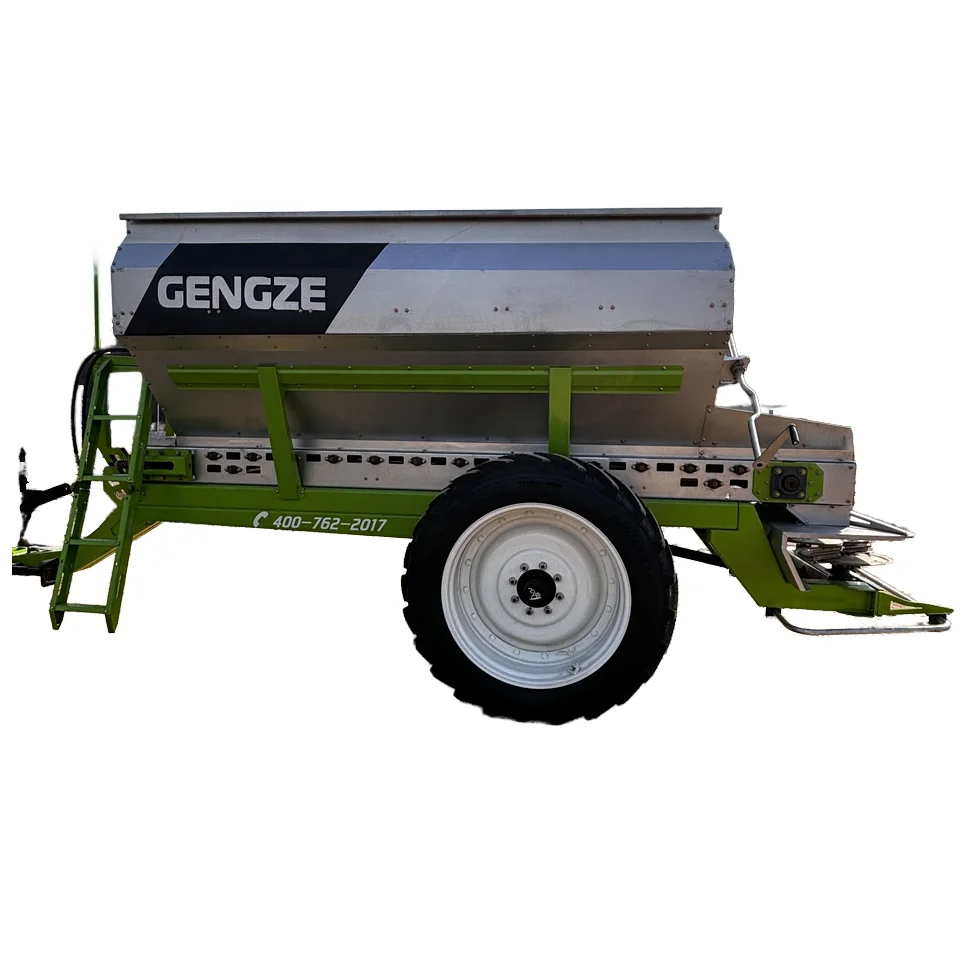
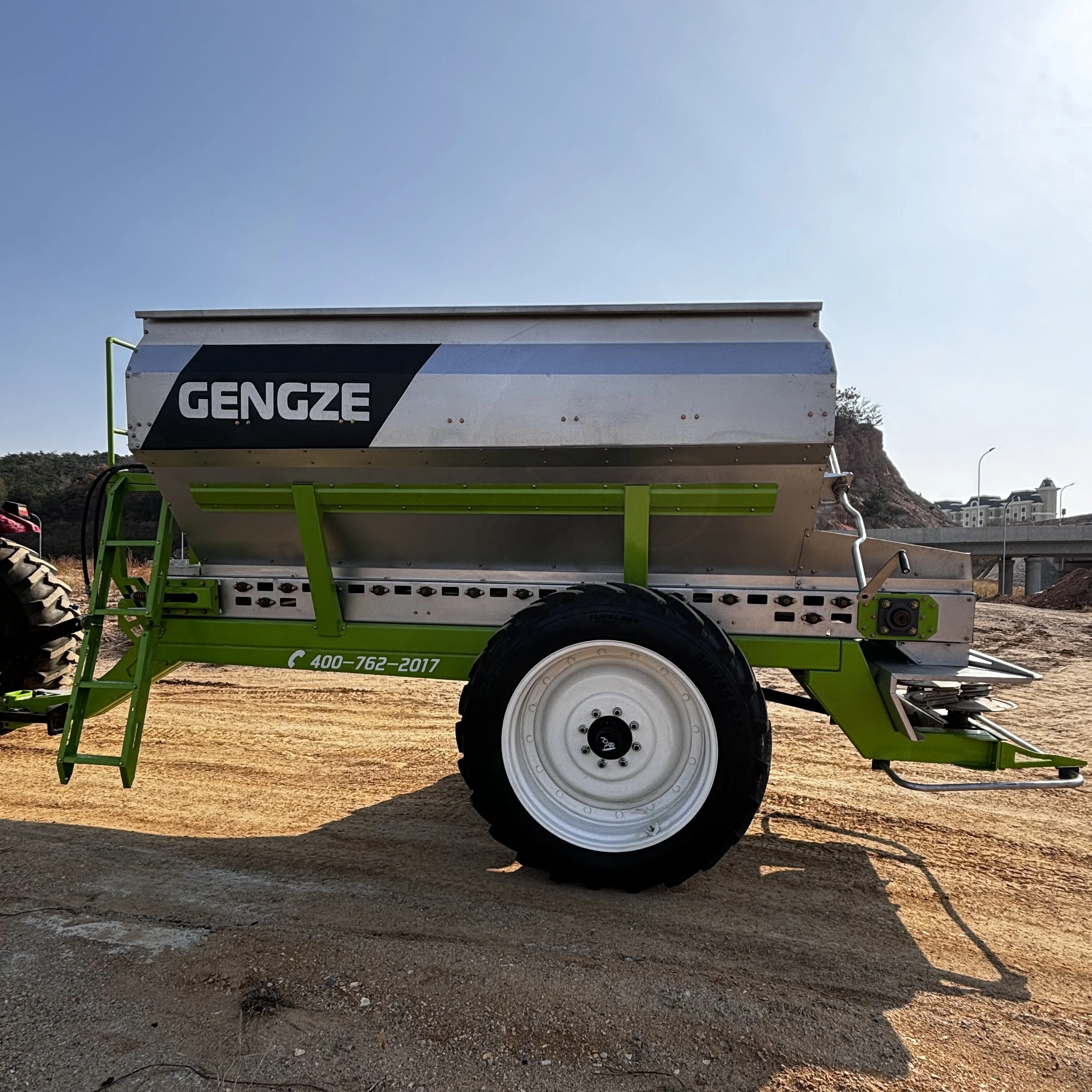
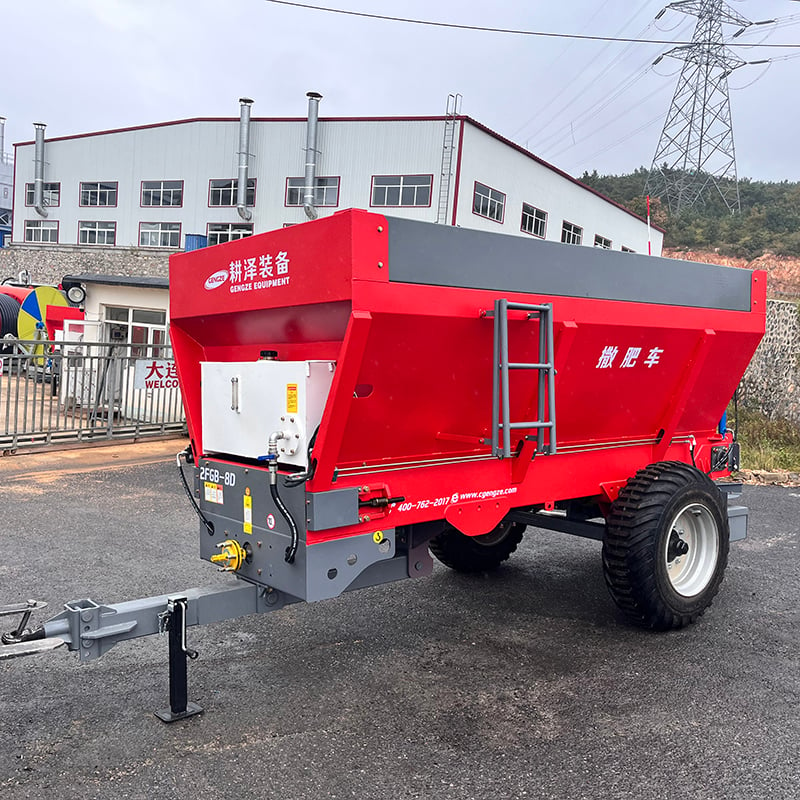
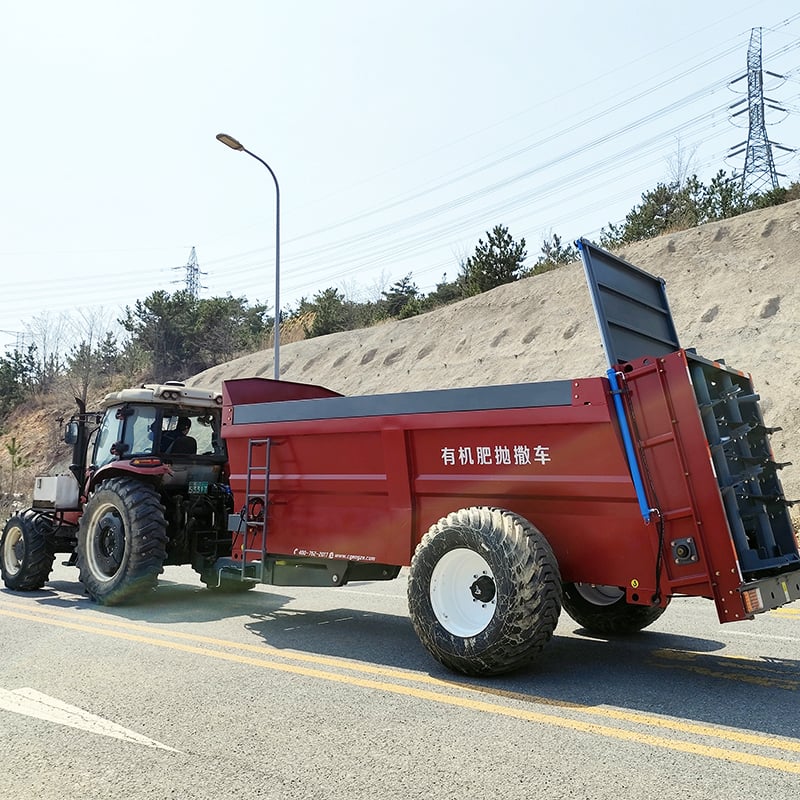
Modern intelligent manure spreaders are professional supporting equipment for the resource utilization of livestock manure, covering the treatment and returning of solid decomposed manure, biogas residue, liquid biogas slurry and manure water. Relying on efficient mechanical operation and precise control technology, the equipment perfectly solves the industry pain points of traditional manure disposal, and builds a sustainable circular development model of "livestock breeding produces organic waste - mechanical precise returning to field - soil fertility improvement - crop green planting - feeding livestock with crops".
First of all, it realizes harmless and resource-based disposal of breeding waste. The manure spreader efficiently collects, transports and evenly spreads livestock manure to farmland, completely avoiding environmental pollution caused by random discharge and open-air stacking. After scientific mechanical returning, livestock manure is fully decomposed and integrated into the soil, converting waste organic resources into natural high-quality organic fertilizer. According to industry test data, a single large-scale manure spreader can process 2,000 to 5,000 tons of livestock manure every year, completely solving the waste disposal pressure of medium and large-scale breeding farms.
Secondly, it achieves precise fertilization and improves land utilization efficiency. Different from the uneven spreading of manual operation, modern manure spreaders adopt professional centrifugal spreading and spiral stirring technology, with a spreading uniformity of more than 90%. The hydraulic adjustable system can flexibly adjust the fertilization amount and burial depth according to different soil textures, crop types and growth cycles, adapting to the fertilization needs of base fertilizer and top dressing. Precise quantitative spreading avoids local nutrient excess or deficiency, effectively reduces nutrient runoff and volatilization loss, and significantly improves the absorption and utilization rate of soil nutrients.
Moreover, it optimizes the agricultural planting environment and reduces carbon emissions. Long-term mechanical returning of manure can continuously increase soil organic matter content, improve soil compaction, enhance soil water retention and fertilizer retention capacity, and repair degraded cultivated land. At the same time, organic manure returning effectively replaces chemical fertilizers, reduces the carbon emission generated in the production and application process of chemical fertilizers, and realizes dual benefits of ecological protection and energy conservation and emission reduction, which is highly in line with the green development standards of modern ecological agriculture.
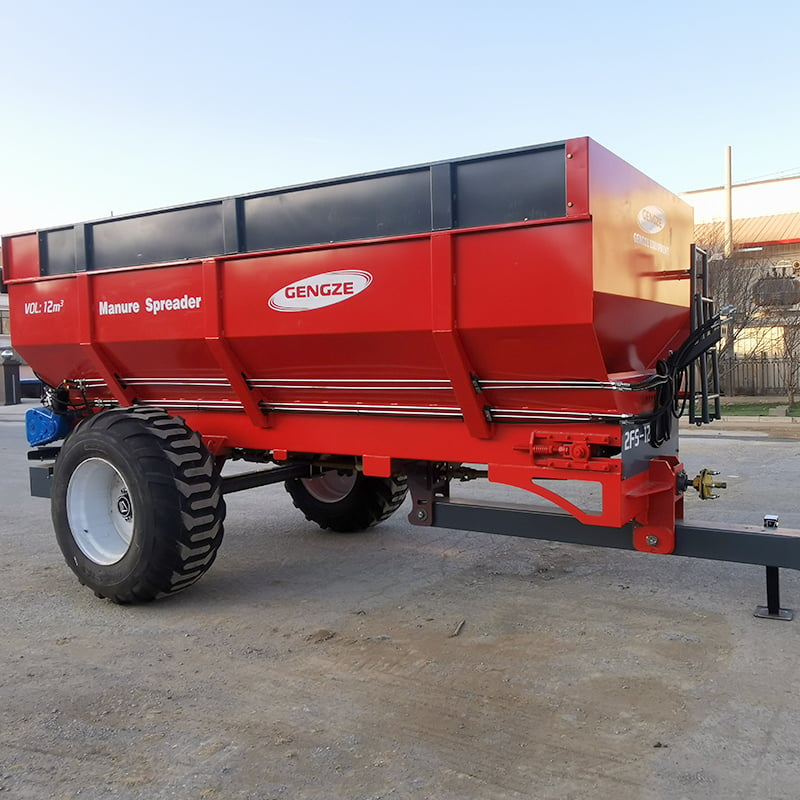
Industrial Value: Empower Sustainable Upgrading of Animal Husbandry
The popularization and application of manure spreaders have built a bridge for the integrated development of planting and breeding, bringing multi-dimensional value to agricultural and pastoral production. For breeding enterprises, it realizes standardized and harmless disposal of manure, reduces environmental compliance risks, and turns waste into treasure to reduce waste disposal costs. For planting production, it reduces the input of chemical fertilizers, improves crop quality and yield relying on natural organic nutrients, and reduces agricultural production costs. For the agricultural industry as a whole, it forms a replicable and popular circular agriculture model, effectively alleviates agricultural environmental pressure, protects cultivated land ecological resources, and promotes the healthy and sustainable development of the entire livestock and planting industry.
In addition, with the continuous upgrading of agricultural intelligent technology, modern manure spreaders are equipped with intelligent monitoring systems, which can record the time, location and amount of fertilization operation in real time, provide accurate data support for farm nutrient management plans and environmental supervision and auditing, and help large-scale farms realize standardized, digital and green production management.
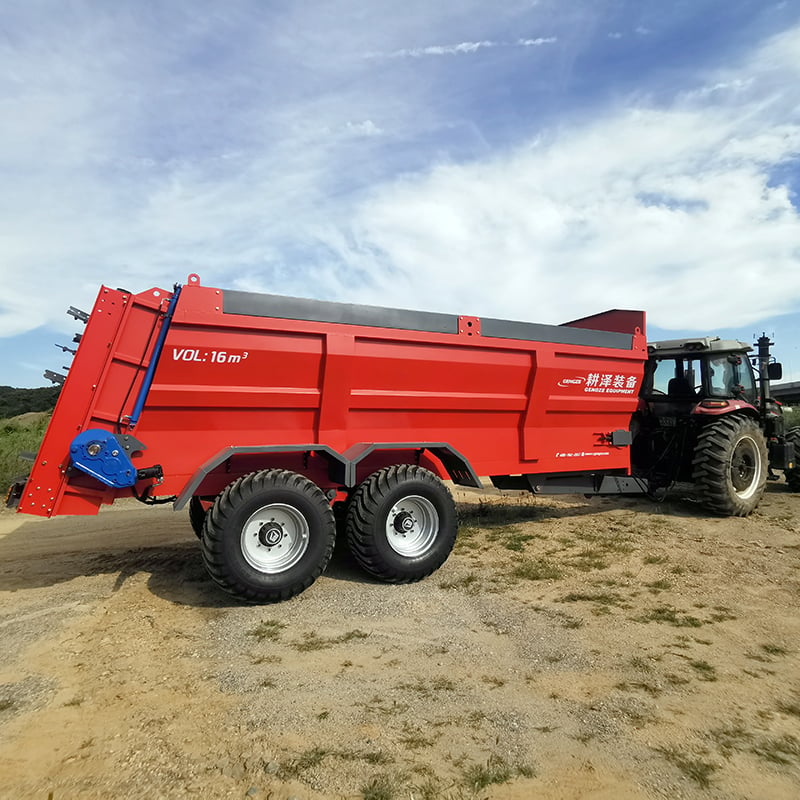
Outlook
With the continuous advancement of global agricultural green upgrading and circular economy construction, the resource utilization of livestock manure will become a mandatory standard and core trend for the development of modern animal husbandry. As key supporting equipment for circular agriculture, manure spreaders will further iterate towards intelligence, high efficiency and multi-scenario adaptation. In the future, we will continue to focus on the research and development and optimization of agricultural and pastoral machinery, empower the deep integration of sustainable livestock farming and circular planting, help the agricultural industry realize ecological cycle, economic efficiency and green development, and contribute to the construction of a modern low-carbon ecological agricultural system.
 Hot News
2026-10-13
2026-10-08
2026-09-29
2026-09-22
2026-09-03
2026-08-28

Dalian Gengze Agricultural Equipment Manufacturing Co.,Ltd
Copyright © Dalian Gengze Agricultural Equipment Manufacturing Co.,Ltd All Rights Reserved | Blog | Privacy Policy
 EN
EN