Requesting a Call:
Online Support
Liquid manure (livestock slurry) is a nutrient-dense organic byproduct of animal agriculture, rich in nitrogen, phosphorus, potassium, and trace micronutrients. When managed correctly, it acts as an economical, eco-friendly alternative to synthetic fertilizers, enhancing soil health and supporting sustainable crop production. Poor management, however, can cause nutrient runoff, water pollution, greenhouse gas emissions, odor issues, and regulatory non-compliance. This streamlined guide outlines standard industry practices for liquid manure storage, handling, precision spreading, and environmental compliance for professional farm operations.
1. Overview & Core Management Principles
Liquid manure is a fluid livestock waste mixture containing dissolved nutrients, suspended solids, and active microbes. Compared with solid manure, it delivers faster nutrient release but carries higher runoff and leaching risks without proper control.
All professional manure management follows the 4R Nutrient Stewardship Framework: right source, right rate, right time, and right place. The core objectives are to protect nutrient value during storage, apply crop-matched nutrient rates, eliminate environmental risks, and meet local agricultural and environmental regulations. Management strategies are adjusted based on climate, soil condition, crop rotation, and farm scale.
2. Liquid Manure Storage Best Practices
Proper storage is critical to prevent nutrient loss, leakage, and contamination. Well-designed storage systems preserve manure quality and enable scheduled field application throughout the year.
2.1 Common Storage Systems
Farms adopt four mainstream storage solutions for different operational needs:
•Concrete Tanks: Durable, fully sealed, and low-maintenance. Suitable for small to mid-sized farms, preventing groundwater seepage and nutrient volatilization. Covered designs reduce odor and rain dilution.
•Earthen Lagoons: Cost-effective for large-scale livestock operations. Layered structure supports natural microbial stabilization of organic matter and effective odor control.
•Open Storage Ponds: Flexible outdoor storage with strict lining and slope requirements, sized to withstand seasonal rainfall and prevent overflow.
•Covered Storage Systems: Equipped with floating or rigid covers to trap methane, reduce nitrogen loss by 20–30%, and avoid rain dilution. Widely required in regions with strict environmental standards.
2.2 Key Storage Guidelines
•Sufficient Capacity: Design storage for 6–12 months of manure accumulation to avoid overflow during non-spreading seasons.
•Stormwater Isolation: Use berms and drainage barriers to separate clean rainwater from manure zones and prevent flood-related contamination.
•Regular Agitation: Periodic mixing eliminates solid sedimentation, ensures uniform nutrient distribution, and maintains effective storage volume.
•Routine Inspections: Regularly check liners, covers, and pumping equipment for cracks, leaks, and structural damage, especially before extreme weather.
3. Safe Transfer & Handling Protocols
Manure transfer connects storage facilities to field spreading equipment. Standard systems include gravity-flow pipelines for flat terrain and centrifugal/submersible pumps for uneven ground. All pipelines and hoses require post-use cleaning to avoid blockages.
Core handling rules: Fully agitate manure before pumping to ensure consistent nutrients; install spill containment barriers; avoid transfer during heavy rain or high wind to reduce runoff risk.
4. Precision Liquid Manure Spreading
Precision application maximizes crop nutrient uptake while minimizing environmental impact. Application strategies are determined by equipment type, field conditions, timing, and soil nutrient levels.
4.1 Professional Spreading Equipment
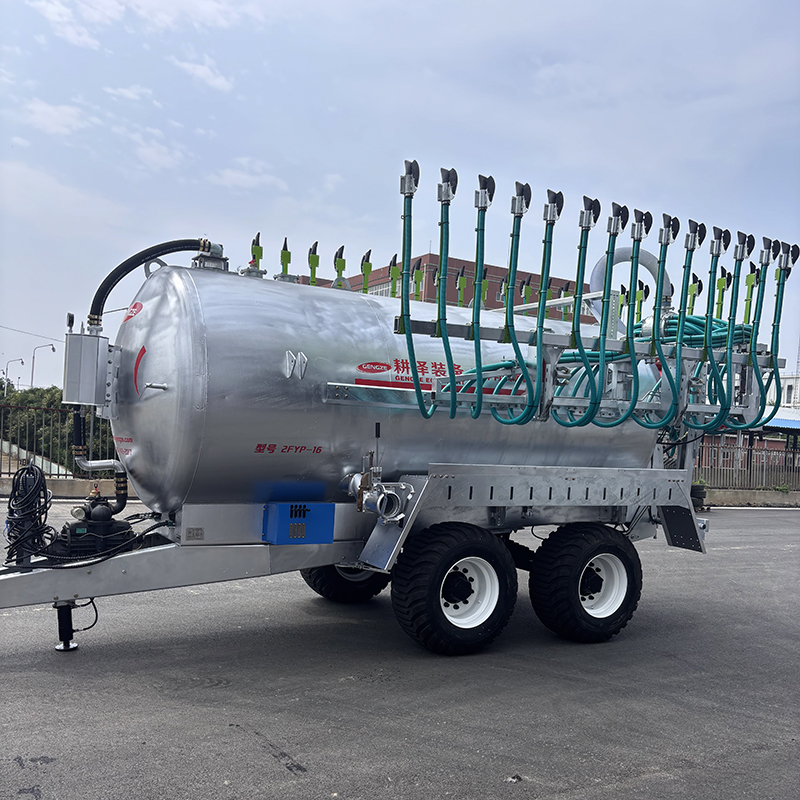
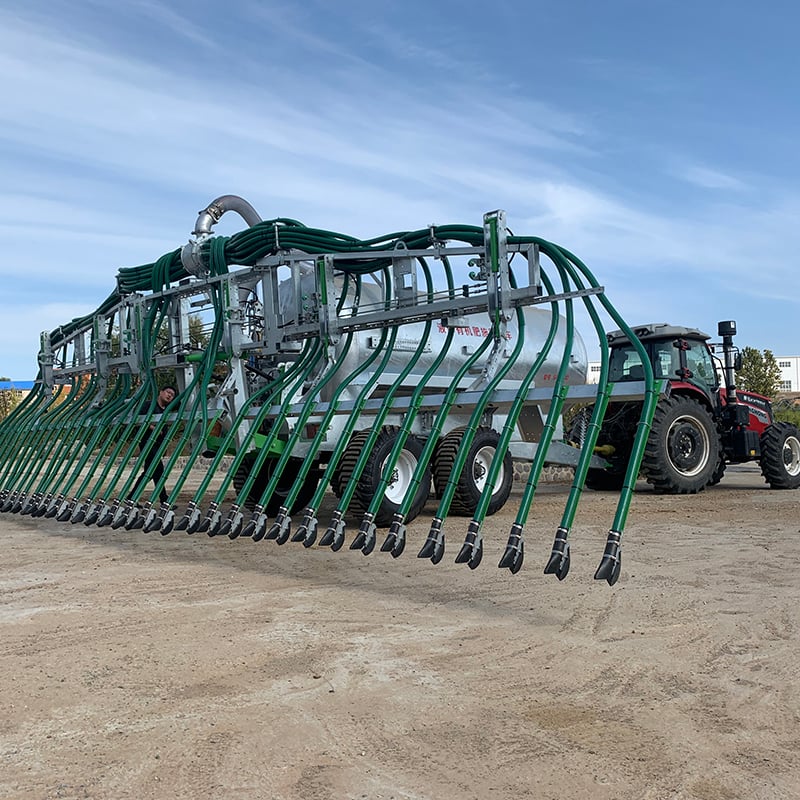
•Trailing Hose Spreaders: Industry-standard banding equipment that reduces ammonia volatilization by 15–25%, ideal for row crops and pastures.
•Trailing Shoe Applicators: Low-disturbance precision tools that place manure directly into topsoil, drastically reducing runoff risks for sloped fields.
•Broadcast Sprayers: High-efficiency for large flat fields, only recommended with immediate soil incorporation due to high nutrient loss risk.
•Irrigation Injection Systems: Enable uniform low-rate application, with fine filtration required to prevent nozzle clogging.
4.2 Optimal Spreading Timing
The best application windows are spring (pre-planting and early growth) and early fall (post-harvest cover crop planting), matching active crop nutrient demand.
Avoid spreading on frozen, waterlogged, or snow-covered fields, or during upcoming heavy rainfall. Apply manure in cool, calm morning or evening hours to reduce odor and nutrient volatilization.
4.3 Application & Soil Protection Rules
Always calculate application rates based on annual soil tests and crop nutrient requirements, rather than fixed volumes. Match application speed to soil infiltration capacity to avoid surface runoff.
Maintain mandatory buffer zones near water bodies, drinking water sources, and drainage ditches to comply with environmental protection standards.
5. Post-Spreading & Nutrient Optimization
Surface-applied manure should be shallowly incorporated within 24 hours to reduce ammonia loss by up to 40%. For no-till farming, trailing shoe injection preserves nutrients without tillage disturbance.
Regularly monitor crop growth and conduct seasonal soil testing to adjust future application rates, preventing nutrient accumulation, soil salinization, and soil degradation.
6. Emission Control & Compliance
Professional manure operations must comply with local regulations on storage specifications, buffer zones, application windows, and record-keeping. Covered storage, timely incorporation, and controlled spreading effectively reduce ammonia and methane emissions and minimize odor nuisances.
Vegetative buffer strips along field edges further prevent water pollution and support sustainable farm management.
7. Maintenance & Common Troubleshooting
Regular equipment calibration, pipeline inspection, and annual sludge removal ensure long-term system stability and consistent application accuracy.
Common solutions:
•Nutrient stratification: Thoroughly agitate the full tank volume before every operation.
•Equipment clogging: Install inline filters and clean pipelines after each use.
•Field runoff: Reduce application rates, adopt injection equipment, and avoid wet soil conditions.
•Excessive odor & nutrient loss: Use covered storage and complete timely soil incorporation.
Conclusion
Liquid manure is a valuable renewable agricultural resource. Standardized whole-process management—from scientific storage and safe transfer to precision spreading and standardized maintenance—converts livestock waste into efficient organic fertilizer. Adhering to 4R nutrient stewardship and environmental compliance improves crop productivity, protects soil and water resources, and supports sustainable, low-emission farm development.
 Hot News
2026-10-13
2026-10-08
2026-09-29
2026-09-22
2026-09-03
2026-08-28

Dalian Gengze Agricultural Equipment Manufacturing Co.,Ltd
Copyright © Dalian Gengze Agricultural Equipment Manufacturing Co.,Ltd All Rights Reserved | Blog | Privacy Policy
 EN
EN