Requesting a Call:
Online Support
In modern ecological agriculture, returning livestock and poultry manure to farmland has become a core part of circular planting and breeding. Choosing between dry manure spreaders and liquid manure spreaders is not just a decision about farm machinery—it directly impacts soil structure, nutrient retention, microbial activity, and long-term farmland health. Combined with the working characteristics, applicable scenarios and soil effects of professional agricultural equipment, this article analyzes the advantages, limitations and suitable soil conditions of the two types of spreaders, helping you pick the optimal solution for your fields.
An Overview of Two Manure Spreaders
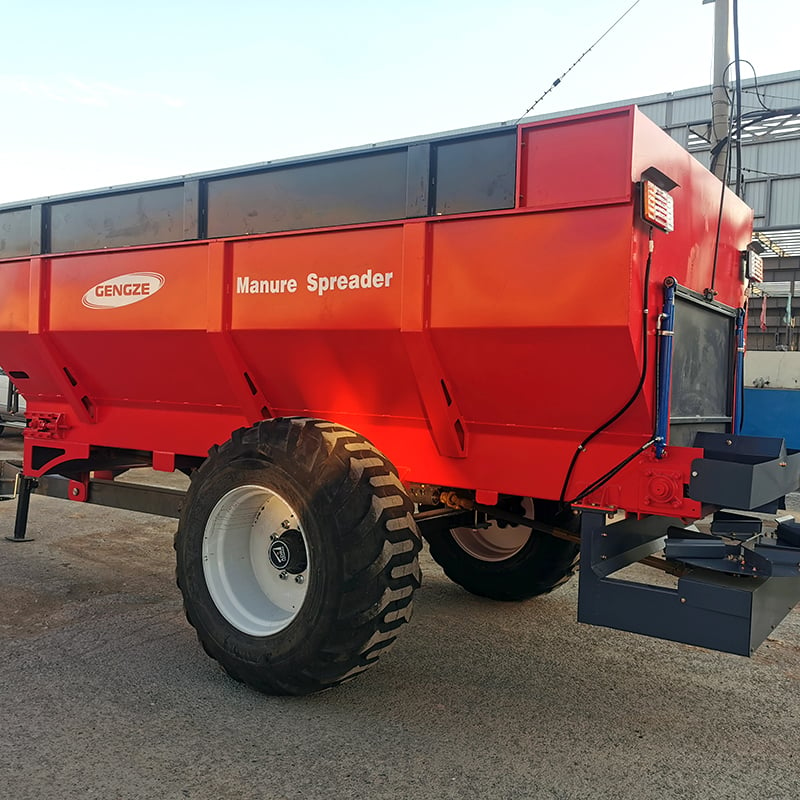
Dry manure spreaders and liquid manure spreaders are core equipment for livestock manure resource utilization, with distinct structural designs and working principles tailored to different manure forms.
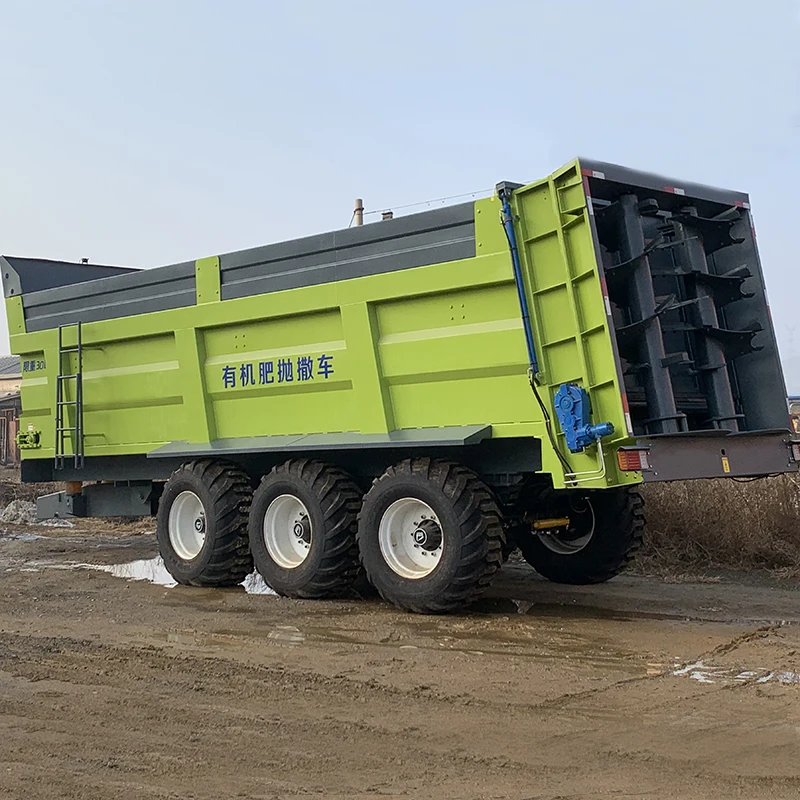
Dry manure spreaders are towed by tractors, mainly used to distribute fermented solid manure, compost and semi-solid livestock manure. Typical models include double-disc spreaders, horizontal beater spreaders and vertical beater spreaders. Driven by the tractor’s power take-off (PTO), the internal conveyor chain transports manure backward, and high-speed rotating beaters crush and scatter materials evenly across the field. Some upgraded hydraulic push-type dry manure spreaders adopt modular design, which can switch between spreading and material transportation to improve equipment utilization. These machines feature simple structures, strong mobility and stable operation, and are widely used in plains, pastures and cold regions where frozen manure needs to be treated.
Liquid manure spreaders, also known as slurry tank spreaders, are designed for liquid manure, biogas slurry and mixed liquid organic fertilizer. Equipped with imported vacuum pumps, sealed tanks and multi-group spraying pipelines, they realize negative-pressure self-priming and automatic spraying. Supporting accessories such as cantilever fertilizing trusses and comb blade fertilizing devices can be matched to meet surface spraying, deep tillage fertilization and topdressing needs. Most tank bodies adopt hot-dip galvanizing technology for anti-corrosion, and wide tires reduce ground pressure, making them suitable for large farms and wet fields.
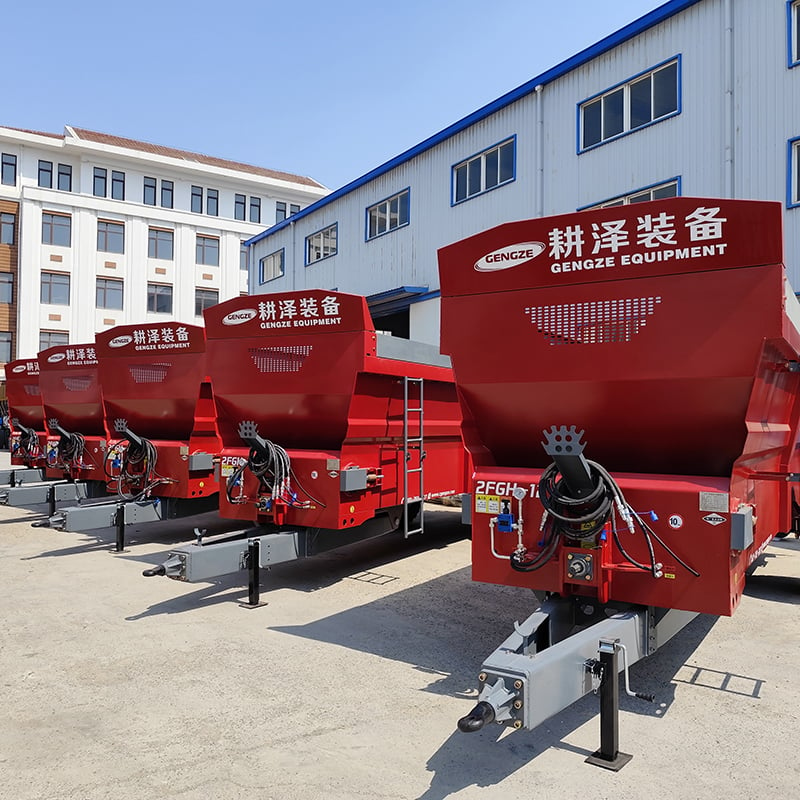
Impacts on Soil: Dry Manure Spreader
Core Strengths for Soil Health
1.Improve soil structure and increase organic matter sustainably
Solid manure is rich in straw residues, coarse fibers and organic colloids. When spread by dry manure spreaders, these substances gradually decompose in the soil, effectively loosening compacted soil, enhancing soil porosity and water retention capacity. Long-term application can steadily raise soil organic content, activate soil aggregate structure, and form a stable plow layer—especially ideal for sandy soil and heavily compacted clay soil with poor air permeability. The decomposed solid manure also provides long-term nutrients for soil microorganisms, creating a healthy microbial living environment.
2.Slow nutrient release and long-lasting fertility
The nutrients in dry manure exist in organic combined forms, which need to be decomposed by soil microorganisms before being absorbed by crops. This slow-release characteristic avoids the problem of nutrient leaching caused by rapid loss. It provides continuous nutrition for crops throughout the growth cycle and reduces the risk of soil nutrient imbalance caused by excessive fertilization. For field crops with long growth cycles such as corn, wheat and pasture, dry manure can maintain stable soil fertility for a long time.
3.Low risk of soil salinization and surface runoff
After being crushed and spread by beaters, solid manure attaches to the soil surface and mixes with topsoil during tillage. It will not flow with surface water in rainy days, greatly reducing nutrient loss and non-point source pollution. Meanwhile, fully fermented dry manure has moderate salinity, and long-term use will not cause excessive salt accumulation in the topsoil, which is friendly to sensitive crops and dryland soil.
Limitations & Applicable Soil Reminders
The decomposition of dry manure relies on soil temperature and moisture. In low-temperature and arid soil environments, the decomposition rate slows down, and the nutrient supply cycle is prolonged, which is not conducive to the rapid nutrient demand of seedlings. In addition, if the manure is not fully fermented, direct spreading will cause secondary fermentation in the soil, generate high temperature and burn crop roots, and also consume oxygen in the soil, affecting microbial activity.
Most suitable soils: Compacted clay soil, sandy soil, dryland farmland, pasture and orchards; cold areas with frozen manure in winter are also the dominant application scenarios for dry manure spreaders.
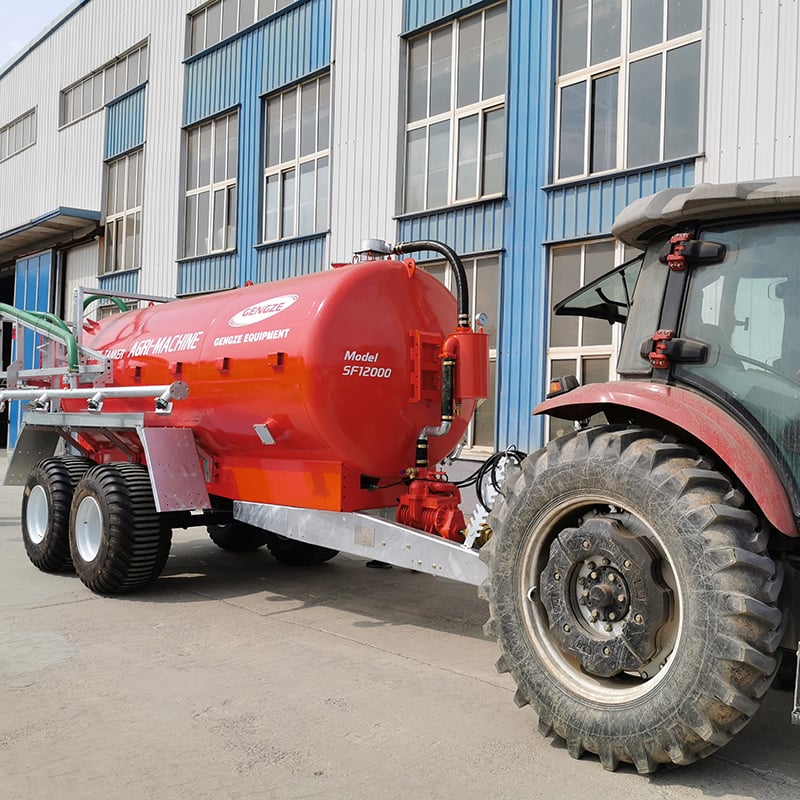
Impacts on Soil: Liquid Manure Spreader
Core Strengths for Soil Health
1.Rapid nutrient absorption and uniform soil fertilization Liquid manure dissolves nitrogen, phosphorus, potassium and trace elements in water. After being sprayed or deeply applied by liquid manure spreaders, nutrients quickly infiltrate the soil with water and reach the crop root zone. It features fast fertilizer efficiency and uniform distribution, which can quickly supplement soil nutrients. For seedling topdressing and urgent fertilization in the growth period, liquid manure can significantly improve the utilization rate of nutrients. When matched with deep fertilization accessories, liquid manure can be directly injected into the subsoil, reducing nutrient volatilization and maximizing the retention of active ingredients in the soil.
2.Optimize moist soil environment and activate shallow microorganisms Liquid manure contains a large amount of water and active beneficial bacteria. For water-deficient dry soil and paddy soil, it can supplement soil moisture while fertilizing, improving the activity of shallow soil microorganisms in a short time. For continuous cropping farmland with shallow root systems, the uniform infiltration of liquid manure can avoid local nutrient enrichment, balance the fertility of the topsoil, and relieve the continuous cropping obstacles of shallow soil to a certain extent.
3.Light equipment load and low damage to wet soil Liquid manure spreaders are equipped with wide-body tires to reduce ground pressure, and will not compact wet and soft soil like heavy solid manure machinery. In rainy seasons or low-lying wet fields, liquid manure spreaders can operate normally, avoiding soil hardening and plow layer damage caused by mechanical rolling, which is very important for protecting the fragile structure of wet soil.
Limitations & Applicable Soil Reminders
Liquid manure has a high water content. Long-term single surface spraying on sandy soil with poor water retention will cause nutrient leaching and loss, resulting in insufficient subsoil fertility. In addition, liquid manure has a high nitrogen content. Excessive application for a long time will easily lead to excessive ammonia nitrogen in the soil, induce soil salinization, and may also breed harmful bacteria and affect the soil ecological balance. It is not suitable for long-term single use on dry soil with poor drainage.
Most suitable soils: Paddy fields, vegetable fields, low-lying wet farmland, seedling nurseries and farmland requiring rapid topdressing; it is also the preferred choice for biogas slurry resource utilization in large-scale breeding farms.
Comparative Analysis: Key Factors to Choose the Right Spreader
1.Soil Type & Soil Condition - Choose dry manure spreader if: Your soil is compacted clay, loose sand, or dry land with low humidity. Long-term use needs to improve soil organic matter and repair soil structure. Pastures, orchards and cold regions with frozen manure are also priority choices. - Choose liquid manure spreader if: Your soil is wet paddy field, vegetable field or low-lying waterlogged farmland. The soil has sufficient water content and needs rapid nutrient supplementation. Avoid long-term surface spraying on sandy soil.
2.Crop Planting Mode & Fertilization Demand - Dry manure spreader: Ideal for staple crops (wheat, corn), pasture and fruit trees with long growth cycles. It is mainly used for base fertilizer application before tillage, relying on long-lasting fertility to support the whole growth period of crops. - Liquid manure spreader: Suitable for vegetables, seedlings and short-cycle cash crops. It is mainly used for seedling topdressing and emergency fertilization, requiring nutrients to take effect quickly.
3.Farm Scale & Manure Source - Large-scale breeding farms with mixed solid and liquid manure can be equipped with both types of equipment to realize the full resource utilization of manure. Solid manure is composted and spread by dry manure spreaders, while sewage is treated into liquid manure and applied by liquid manure spreaders, forming a complete ecological cycle. - Small and medium-sized pastures and dryland farms mainly producing solid manure are more cost-effective to choose dry manure spreaders; farms dominated by water-flushed manure and biogas slurry are more suitable for liquid manure spreaders.
4.Climate & Seasonal Adaptability - In cold northern regions, dry manure spreaders can crush and spread frozen manure, adapting to low-temperature operations; liquid manure is prone to freezing and difficult to construct in severe cold. - In rainy and humid southern regions, liquid manure spreaders have better passability in wet fields; dry manure is easy to absorb water and agglomerate, affecting the spreading uniformity of the spreader.
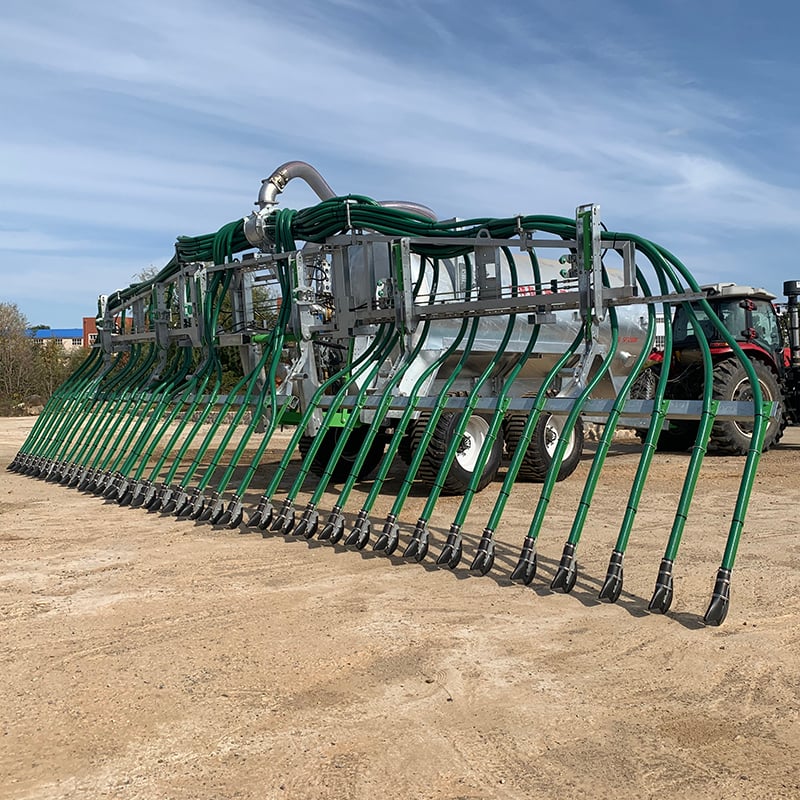
Conclusion: Match the Spreader to Your Soil for Long-Term Farmland Health
There is no absolute "better" between dry manure spreaders and liquid manure spreaders—the best choice is the one that matches your soil, crops and farming model.
If your core demand is to improve soil structure, increase organic matter, and maintain long-term stable fertility for dryland, pasture and orchard soil, a dry manure spreader is the reliable choice. Its slow-release nutrients and fiber components can continuously nourish the soil and lay a foundation for the sustainable health of farmland.
If you focus on rapid nutrient supplementation, adapt to wet fields, paddy fields and short-cycle crops, and need to efficiently treat liquid manure such as biogas slurry, a liquid manure spreader will bring higher work efficiency and fertilization effect. Reasonable deep application can also avoid nutrient loss and protect the shallow soil ecological environment.
For modern circular agriculture, the combination of the two types of spreaders is the most scientific solution. Cooperate with the solid-liquid separator to classify and utilize livestock manure, use dry manure for base fertilizer to improve soil, and liquid manure for topdressing to supplement nutrients. This not only realizes the full recycling of manure resources, but also maintains the physical, chemical and biological health of the soil in an all-round way, helping sustainable and high-yield agricultural production.
 Hot News
2026-10-13
2026-10-08
2026-09-29
2026-09-22
2026-09-03
2026-08-28

Dalian Gengze Agricultural Equipment Manufacturing Co.,Ltd
Copyright © Dalian Gengze Agricultural Equipment Manufacturing Co.,Ltd All Rights Reserved | Blog | Privacy Policy
 EN
EN